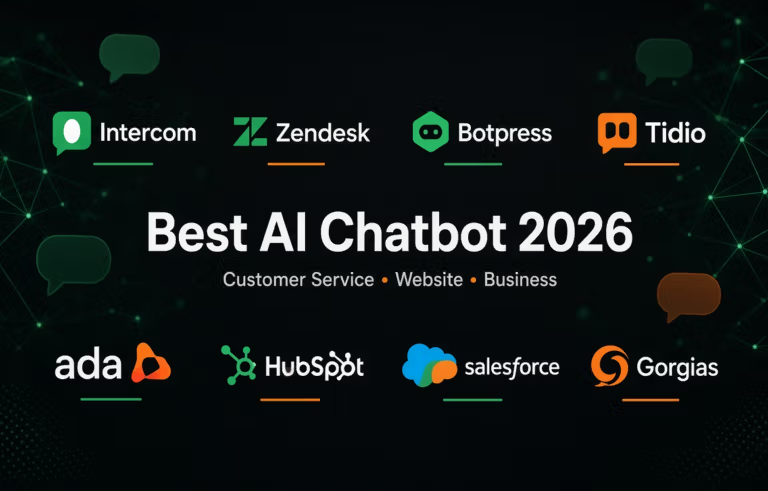
Best AI Chatbot 2026 Comparison
(Best AI chatbot for customer service, free options, business use & more) People searching for the best AI chatbot in 2026 usually want one of three things: a tool for customer service on their website or product, a free AI chatbot they can use immediately, or a clear comparison that helps them decide which AI chatbot is best for their specific case. There is no single winner. The best AI chatbot depends on whether you need customer support automation, a free everyday assistant, character-style conversations, or something that integrates with your CRM and website. This page focuses primarily on AI chatbots that businesses actually deploy for customer service, product support, and website conversations, while also answering the most common questions about free options, restrictions, and other use cases.Quick comparison table
| # | Platform | Best for | Integration | Tech | Scale (approx.) |
|---|---|---|---|---|---|
| 1 | Intercom Fin | SaaS / product customer support | Native website + helpdesk | RAG + support agent | ~25k–30k orgs (Fin: thousands) |
| 2 | Zendesk AI | Teams already on Zendesk | Native Zendesk Suite | RAG + helpdesk AI | 100k+ customers |
| 3 | Botpress | Custom agents & multi-channel | Embed, API, self-host | Multi-LLM + RAG + flows | Hundreds of prod deploys; large community |
| 4 | Tidio (Lyro) | Small sites & e-commerce | Simple script + Shopify | Proprietary AI + live chat | 300k+ businesses claimed |
| 5 | Ada | High-volume structured support | Multi-channel | No-code automation + AI | Low thousands (enterprise) |
| 6 | HubSpot Customer Agent | HubSpot CRM users | Native HubSpot | CRM-grounded agent | HubSpot customer base |
| 7 | Salesforce Agentforce | Salesforce enterprises | Native Salesforce | Agentic CRM workflows | Salesforce customer base |
| 8 | Gorgias AI | E-commerce order support | Shopify-centric helpdesk | Helpdesk AI + order data | Strong mid/large Shopify share |
| 9 | ElevenLabs | Voice agents & spoken support | API + telephony / in-app | Voice AI (TTS/STT) + your brain | Hundreds of thousands of builders |
| 10 | Voiceflow | Designed conversation agents | Visual builder + channels | LLM + dialogue design | Thousands of product/CX teams |
| 11 | Sierra | Enterprise autonomous support | Enterprise channels + systems | High-autonomy AI agents | Enterprise brands |
| 12 | Decagon | Enterprise multi-step support | Enterprise deployment | Multi-step AI agents | Growing enterprise use |
| 13 | Rasa | Full-control / self-hosted AI | Self-host or cloud + APIs | Open-source conversational AI | Large OSS + enterprise adopters |
| 14 | Chatbase-style | Fast knowledge / FAQ bots | Simple embed + API | Document RAG | Thousands of companies |
| 15 | Custom RAG (LangChain / LlamaIndex + vector DB) | Max control, complex or regulated | Fully custom | LangChain/LlamaIndex + vector DB (+ optional ElevenLabs voice) | In-house builds |
1. Intercom Fin
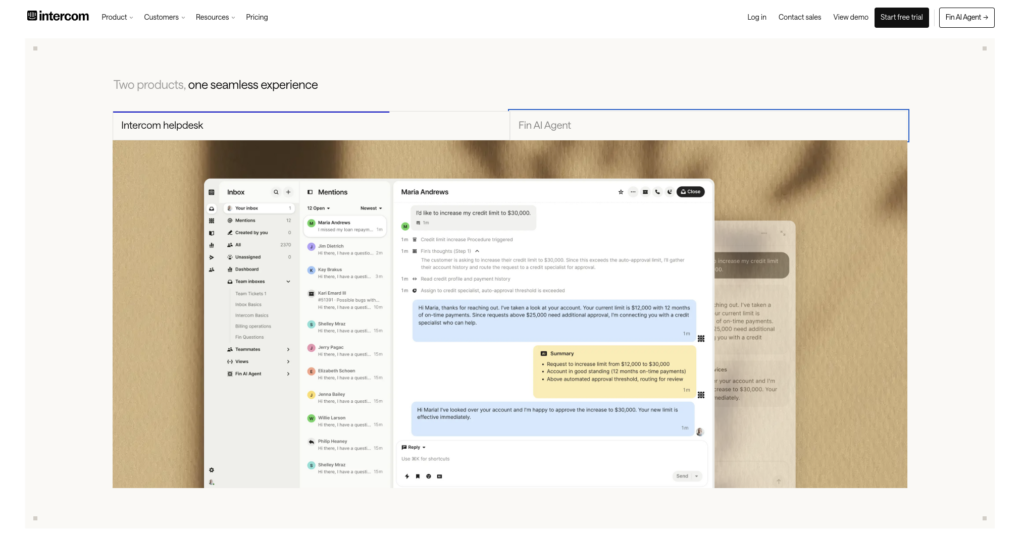 Primary use cases: Customer support, in-product help, SaaS onboarding assistance.
Integration: Native website widget + Intercom inbox. Works with other helpdesks but deepest experience is inside Intercom.
Tech: RAG over help center + conversation history, plus defined actions.
Scale: Intercom serves ~25,000–30,000 organizations; Fin itself is used by several thousand of them. Most teams deploy Fin as the first line of support on SaaS websites and inside products. It works best when you already have a decent help center. The bot retrieves from your articles and past conversations, so answer quality depends heavily on how clean and up-to-date that content is. When documentation is strong, containment rates of 50%+ on repetitive questions are realistic. When documentation is thin or outdated, Fin starts giving generic or incorrect answers and users notice quickly. Handoff to human agents is one of its stronger points — context is usually preserved, so the agent does not start from zero. Pricing per successful resolution can become expensive at high volume, which pushes teams to keep improving the knowledge base. Integration is smooth if you already live in Intercom; it is more awkward if you want to keep your existing helpdesk and only add a widget. Fin is less flexible for complex multi-step processes that need custom logic or deep external API calls. In practice it is a strong managed support agent and frequently ranks among the best AI chatbot options for customer service in SaaS companies.
2. Zendesk AI
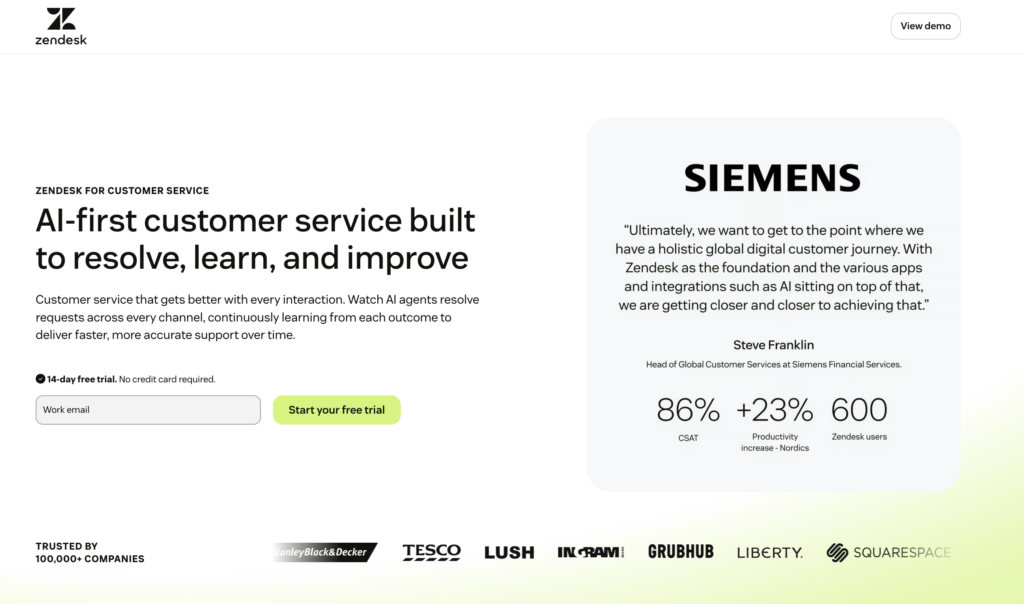 Primary use cases: Ticket deflection, agent assistance (copilot), omnichannel support.
Integration: Native inside Zendesk Suite.
Tech: RAG on help center and tickets + Zendesk models and workflows.
Scale: Zendesk has well over 100,000 customers globally. Zendesk AI is used almost exclusively by companies that already run support on Zendesk. The main value is ticket deflection and agent copilots rather than a standalone website chatbot experience. It can answer from the help center and suggest replies to human agents. Because it sits inside the existing ticket system, reporting and compliance features feel familiar to support managers. The downside is cost structure (seats + AI resolution fees) and the fact that the conversational experience is tied to Zendesk’s interface. Teams that want a modern, messaging-first widget often find it less elegant than Intercom. Implementation is low-effort only if Zendesk is already the system of record. For organizations outside the Zendesk ecosystem it is rarely the first choice when people search for the best AI chatbot for customer service.
3. Botpress
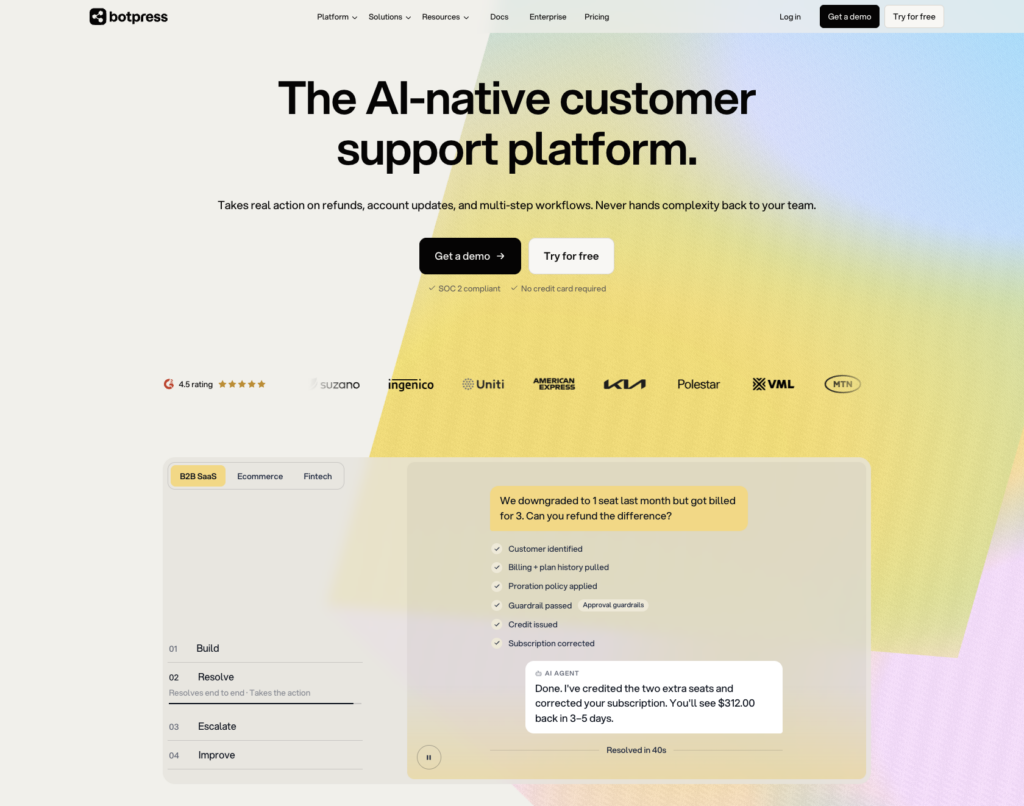 Primary use cases: Custom support agents, multi-channel bots, workflows that call internal APIs.
Integration: Website embed, WhatsApp, Slack, API, optional self-hosting. Connects to most CRMs and backends.
Tech: Multi-LLM support, built-in RAG, visual + code flows, tool calling.
Scale: Hundreds of visible production company deployments; broader community and agent count is significantly larger. Botpress is chosen when teams need more control than managed agents provide. It is used for website support, WhatsApp agents, in-product assistants, and workflows that must call internal APIs or update multiple systems. You can start with the visual builder and add code where needed. RAG works well if you invest in proper document processing and retrieval tuning; poor chunking or outdated sources produce the same garbage answers as any other RAG system. User experience depends entirely on how carefully the flows and fallbacks are designed. A well-built Botpress agent can feel more capable than Fin on complex tasks. A poorly built one feels broken. Integration effort is higher than pure SaaS tools, but the payoff is flexibility and the option to self-host. It sits in the middle: more structure than pure LangChain, more freedom than Intercom or Ada. It is one of the stronger options when the question is which AI chatbot is best for custom business logic.
4. Tidio (Lyro)
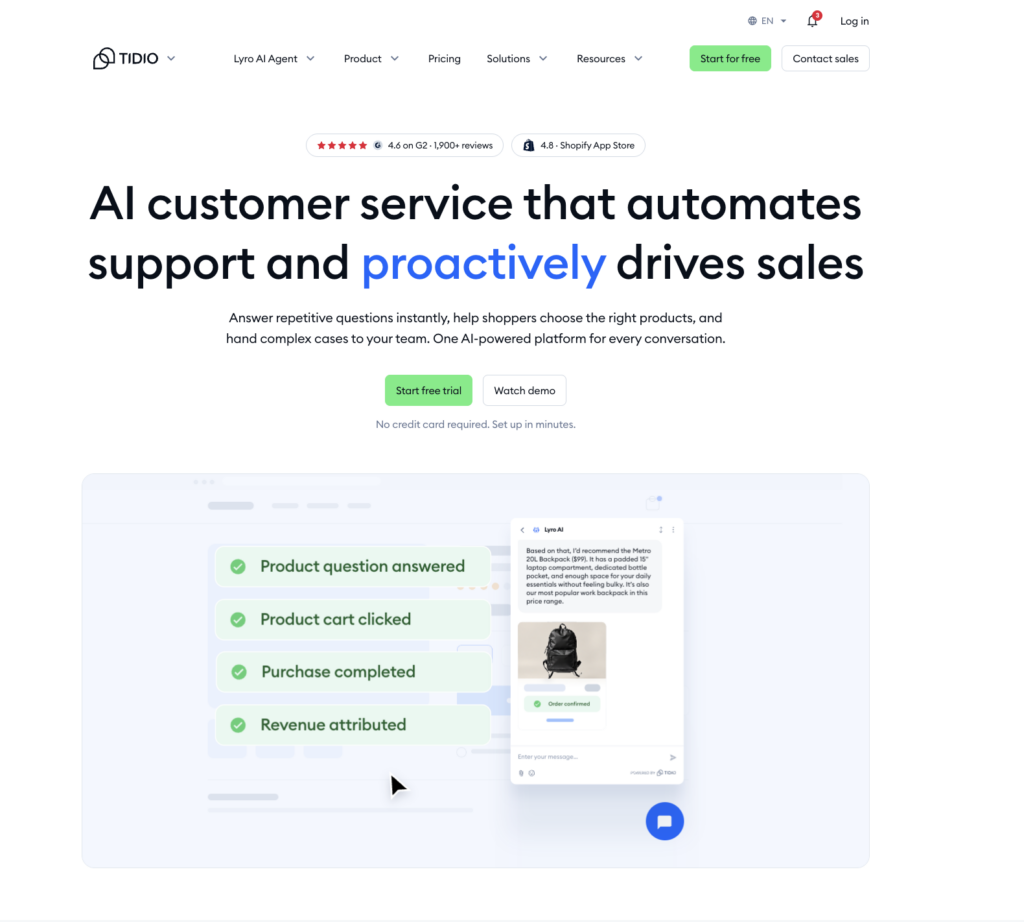 Primary use cases: Basic support and sales chat on small-to-medium websites and e-commerce stores.
Integration: Simple website script + strong Shopify/WooCommerce connectors.
Tech: Proprietary Lyro AI on live-chat infrastructure.
Scale: Claims 300,000+ businesses; tens of thousands of active website installations. Tidio is common on smaller websites and Shopify stores. Most installations use it for basic support questions and simple sales chat. Setup is fast — often under an hour — which is its main advantage. Lyro handles frequent questions reasonably well when they match patterns it has seen, but it struggles with anything that requires real business logic or fresh data from your backend. Human handoff exists and is usable. At low volume the cost is attractive. As conversation volume and complexity grow, teams usually outgrow it and move to Intercom, Gorgias, or a custom solution. It is a practical starting point, not a long-term architecture for serious product support, but it remains one of the more accessible free-to-start AI chatbot options for small sites.
5. Ada
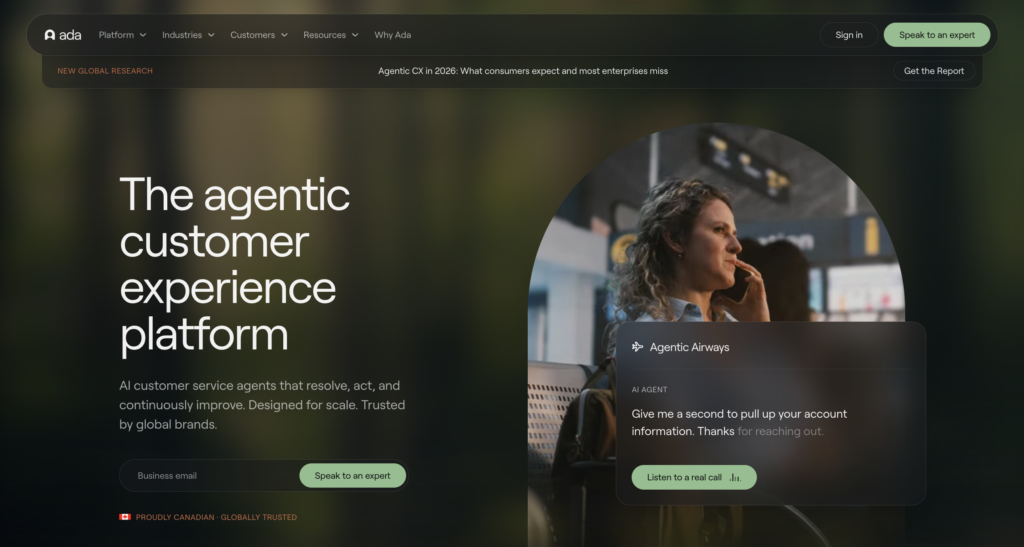 Primary use cases: High-volume structured customer support automation.
Integration: Multi-channel (web, messaging apps, etc.).
Tech: No-code flows + AI resolution engine.
Scale: Enterprise-focused; typically low thousands of customers. Ada is deployed mainly by larger consumer and service brands that need structured, high-volume automation rather than open-ended conversation. Flows are designed visually and the system is tuned for repeatable service scenarios. It can feel rigid compared with more free-form agents, but that rigidity is intentional — it reduces unexpected behavior at scale. Integration covers multiple channels. It is rarely chosen by small product teams looking for a lightweight website bot. The sweet spot is organizations with dedicated CX teams and clear process ownership that want consistency over conversational flair.
6. HubSpot Customer Agent
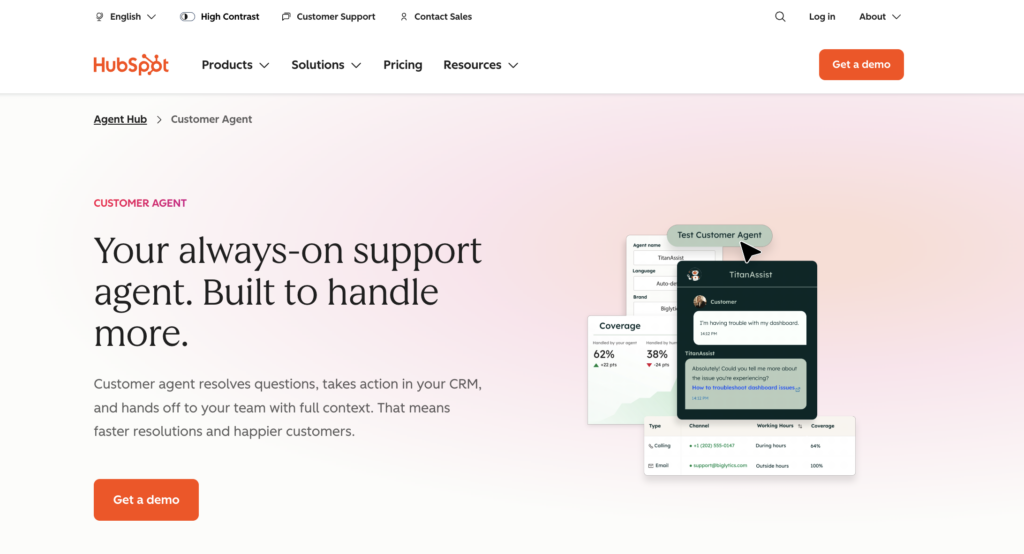 Primary use cases: Support and light sales assistance inside HubSpot.
Integration: Native HubSpot CRM.
Tech: CRM-grounded conversations and actions.
Scale: Available across the large HubSpot customer base. This agent is useful only if HubSpot is already your CRM. Its advantage is direct access to contact, deal, and ticket data, so conversations can reference real customer context instead of asking the user to repeat everything. It is used for both support and light sales assistance inside the HubSpot ecosystem. Outside HubSpot it has little relevance. Teams that run sales and service on HubSpot often find it convenient; everyone else ignores it.
7. Salesforce Agentforce
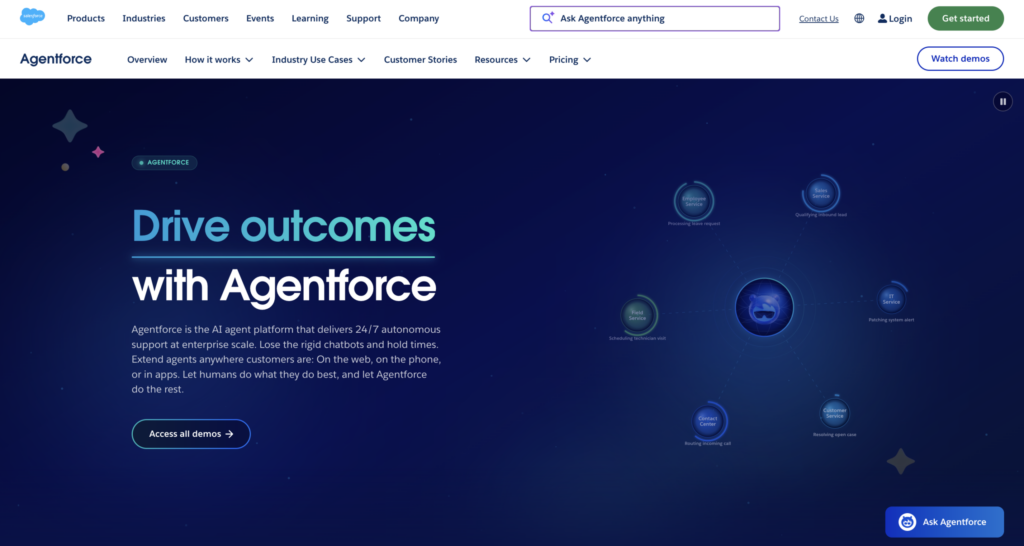 Primary use cases: Service and CRM processes inside Salesforce.
Integration: Native Salesforce.
Tech: Agentic workflows grounded in Salesforce data.
Scale: Tied to the large Salesforce customer base. Similar story to HubSpot, but for Salesforce-centric enterprises. The agent can read and write Salesforce objects and participate in service processes. It is not a general website chatbot that you drop onto any site. Value appears only when Salesforce is the core system of record and the conversation needs to stay tightly coupled with CRM data and automation.
8. Gorgias AI
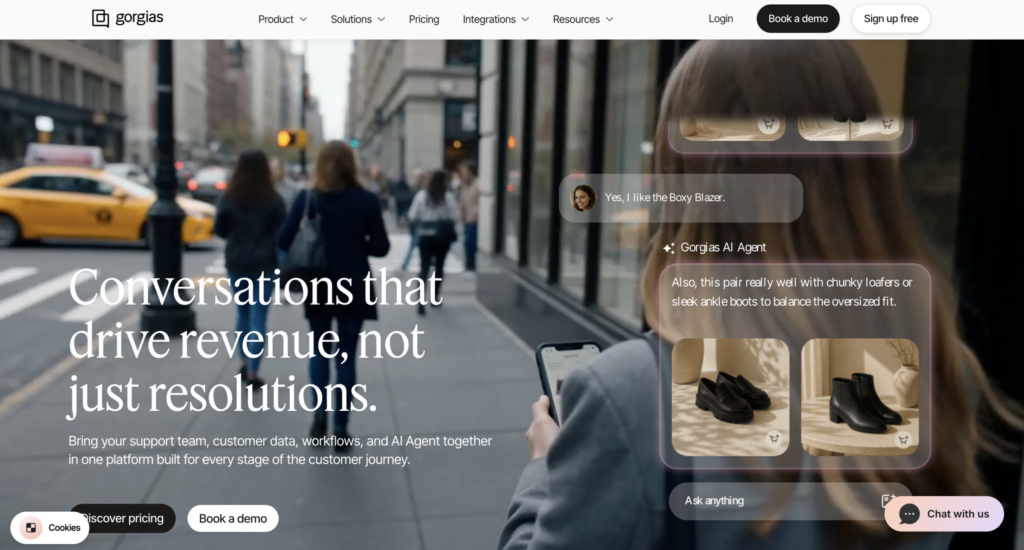 Primary use cases: E-commerce order support (status, shipping, returns, product questions).
Integration: Strong Shopify and e-commerce helpdesk focus.
Tech: Helpdesk AI with order-data awareness.
Scale: Used by a significant share of mid-to-large Shopify and e-commerce brands. Gorgias AI is used almost entirely by e-commerce teams, especially on Shopify. The majority of conversations it handles are about order status, shipping, returns, and product details. Because it sits inside an e-commerce helpdesk, it has good access to order data and can resolve a large share of repetitive post-purchase questions. It is not designed for complex SaaS product support or multi-step business workflows. For online stores with high order-related ticket volume it is one of the more practical and focused options available.
9. ElevenLabs
Primary use cases: Voice agents, phone support, in-app voice assistants, conversational IVR, spoken product help.Integration: REST API and SDKs; connects to custom backends, telephony (Twilio and others), and existing RAG or agent systems. Can power voice on top of a text bot.
Tech: Advanced text-to-speech, speech-to-text, and real-time conversational voice models. Usually paired with an LLM + RAG layer for knowledge.
Scale: Hundreds of thousands of developers and companies; widely used in production by startups and large consumer brands. ElevenLabs is not a classic text chatbot. It is one of the strongest platforms for turning an AI system into a voice agent. Most teams keep knowledge and business logic in a RAG stack or agent framework (LangChain, LlamaIndex, custom backend, or even an existing helpdesk bot) and use ElevenLabs for natural speech input and output. Typical production setup: user speaks → speech-to-text → your agent/RAG decides the answer or action → ElevenLabs speaks the reply with low latency and realistic voice. This is used for phone support lines, in-app voice assistants, and accessibility-focused experiences. Strengths: Voice quality and latency are among the best available; API is straightforward; works well as a layer on top of existing bots.
Limits: It does not replace retrieval, tools, or business logic — you still need that underneath. Cost scales with audio minutes.
Best when: You want the interface to be spoken (phone or in-app voice) rather than typed chat, or you want to upgrade an existing text agent into a voice experience.
10. Voiceflow
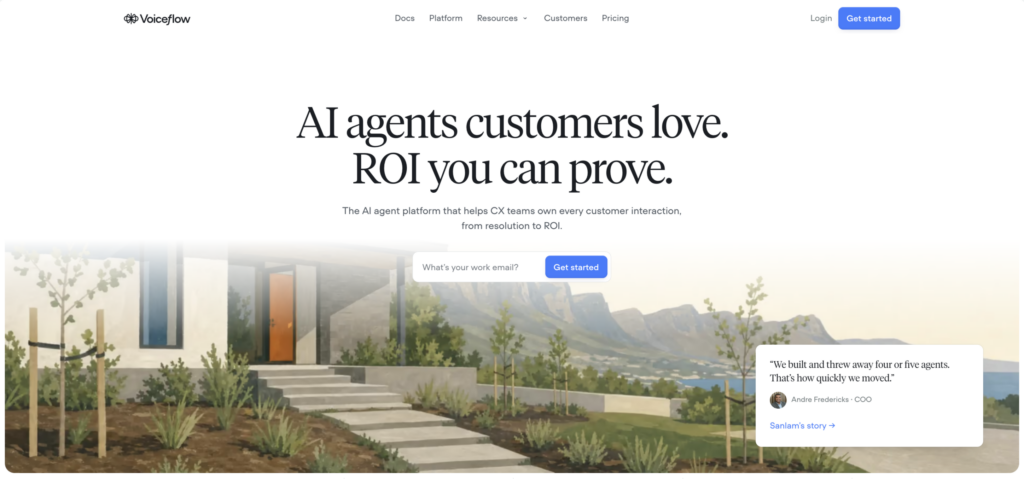 Primary use cases: Designing and shipping AI agents with clear conversation structure; support, onboarding, and guided flows.
Integration: Visual builder plus export/deploy to web, messaging channels, and APIs; connects to LLMs and external tools.
Tech: Conversation design canvas + LLM agents + tool/API calls.
Scale: Used by thousands of product and CX teams; popular for prototyping and production agents. Voiceflow sits between pure no-code chatbot builders and full custom code. Teams map dialogue, conditions, and API actions visually, then connect an LLM for open-ended parts. It is often chosen when product or CX teams need to own the conversation design without waiting on engineering for every change, while still allowing developers to extend behavior. Strong for structured support and onboarding flows; less ideal if you need heavy custom retrieval pipelines or full self-hosting.
11. Sierra
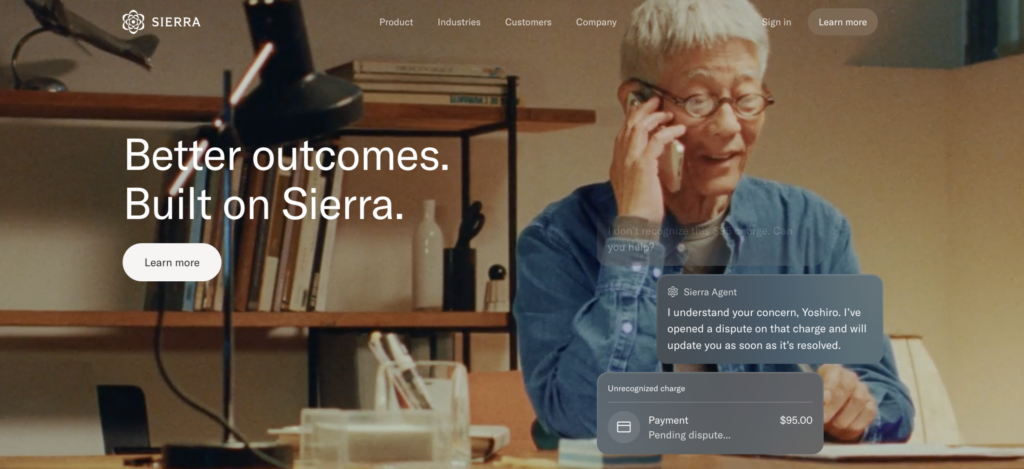 Primary use cases: Enterprise autonomous customer support agents.
Integration: Enterprise channels (web, messaging, voice) and backend systems; sales-led implementation.
Tech: Advanced AI agents focused on resolution, not only deflection.
Scale: Enterprise customer base; used by larger consumer and tech brands. Sierra targets companies that want AI agents capable of resolving complex support issues with high reliability and brand control. It is not a lightweight website widget for small teams. Implementation is typically heavier and commercial terms are enterprise-oriented. Relevant when the requirement has moved from “chatbot” to “AI support agent that can close real tickets.”
12. Decagon
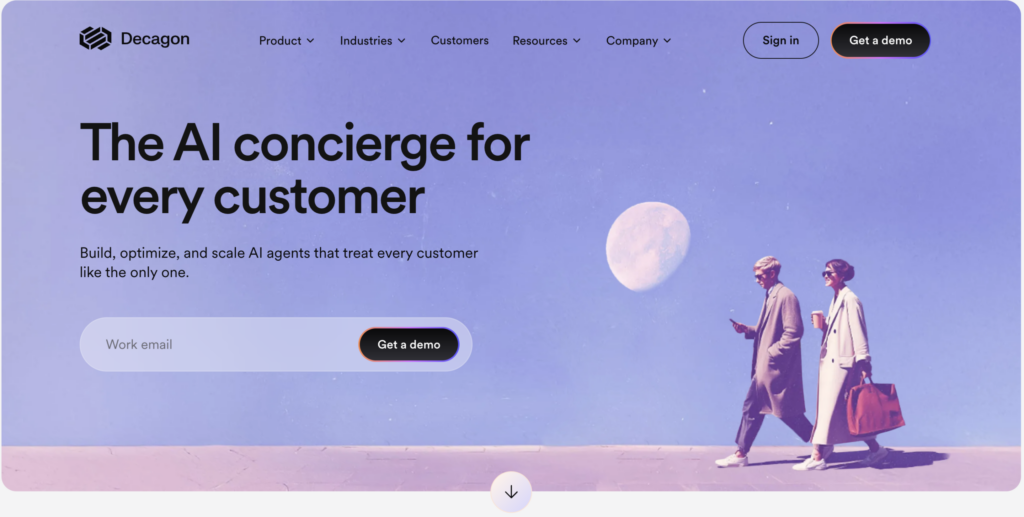 Primary use cases: Enterprise multi-step customer support automation.
Integration: Support channels and internal systems; enterprise deployment.
Tech: AI agents designed for longer, multi-step workflows.
Scale: Growing enterprise adoption; often compared with Sierra and advanced Intercom/Zendesk setups. Decagon focuses on agents that can handle more complex, multi-turn support processes rather than simple FAQ deflection. Like Sierra, it is aimed at larger organizations with serious volume and process complexity. Useful comparison point when evaluating high-end alternatives to building a fully custom RAG + agent stack in-house.
13. Rasa
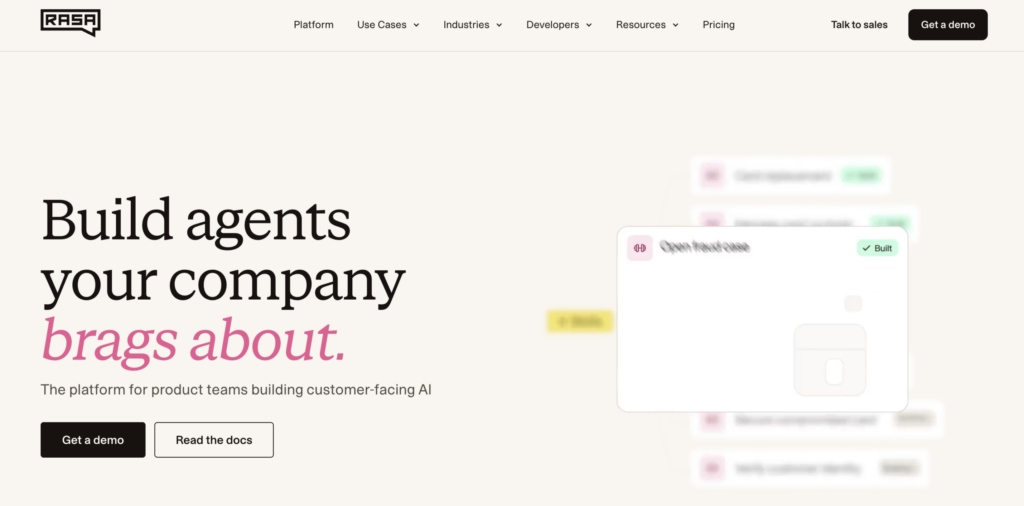 Primary use cases: Fully controlled conversational AI; on-prem / private cloud; complex dialogue logic.
Integration: Self-hosted or cloud; connects to any channel and backend via APIs.
Tech: Open-source conversational AI framework (NLU + dialogue + policies); can be combined with LLMs and RAG.
Scale: Large open-source community; production use across enterprises that need ownership and data control. Rasa is the open-source route when you need maximum control, data residency, or deep custom dialogue. It requires engineering ownership (similar in effort to a custom LangChain stack). Teams choose it when SaaS agents are not acceptable for security, compliance, or flexibility reasons. Steeper learning curve; higher long-term ownership cost; full control over models, data, and behavior.
14. Chatbase-style platforms
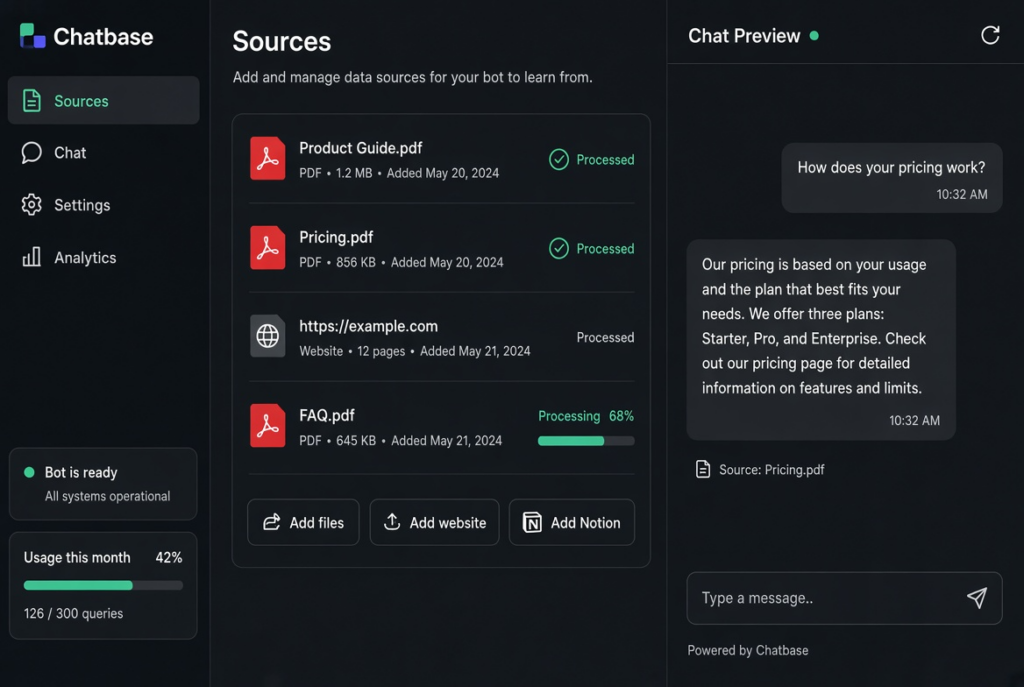 Primary use cases: Quick knowledge-base / FAQ bots.
Integration: Simple website embed + basic API/webhooks.
Tech: Document RAG (upload/crawl → vector store → LLM).
Scale: Thousands of companies use tools in this category. These tools are popular when a team needs a knowledge chatbot live quickly. You upload documents or crawl a site, and a RAG bot is ready in a short time. They are used for FAQ-style support, internal knowledge assistants, and simple product-question handling. Answer quality tracks the quality of the source documents. There is usually limited ability to perform real actions in external systems. Integration is mostly a website embed plus basic webhooks. They are good for fast experiments or straightforward knowledge retrieval, and many offer free tiers, making them relevant when people search for the best free AI chatbot they can embed on a site.
15. Custom RAG (LangChain / LlamaIndex + vector DB)
 Primary use cases: Complex support, product advisors, multi-system agents, regulated environments.
Integration: Fully custom — any website, CRM, helpdesk, or internal API.
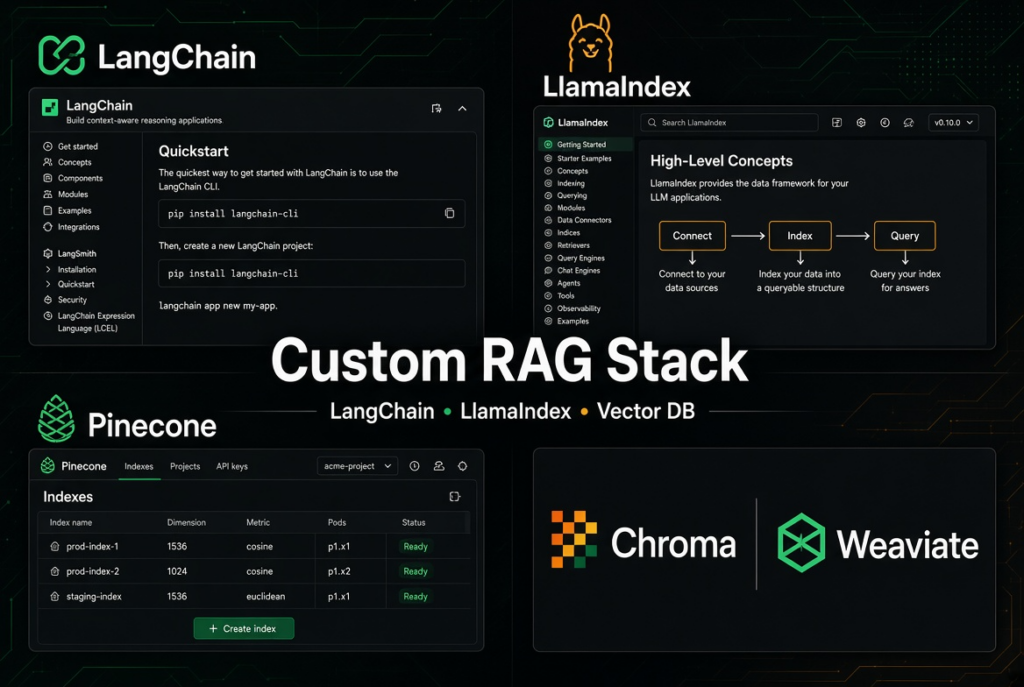
Tech: LangChain or LlamaIndex for orchestration, vector database (Pinecone, Chroma, Weaviate, pgvector…), embeddings, and one or more LLMs. Optional tool-calling agents.
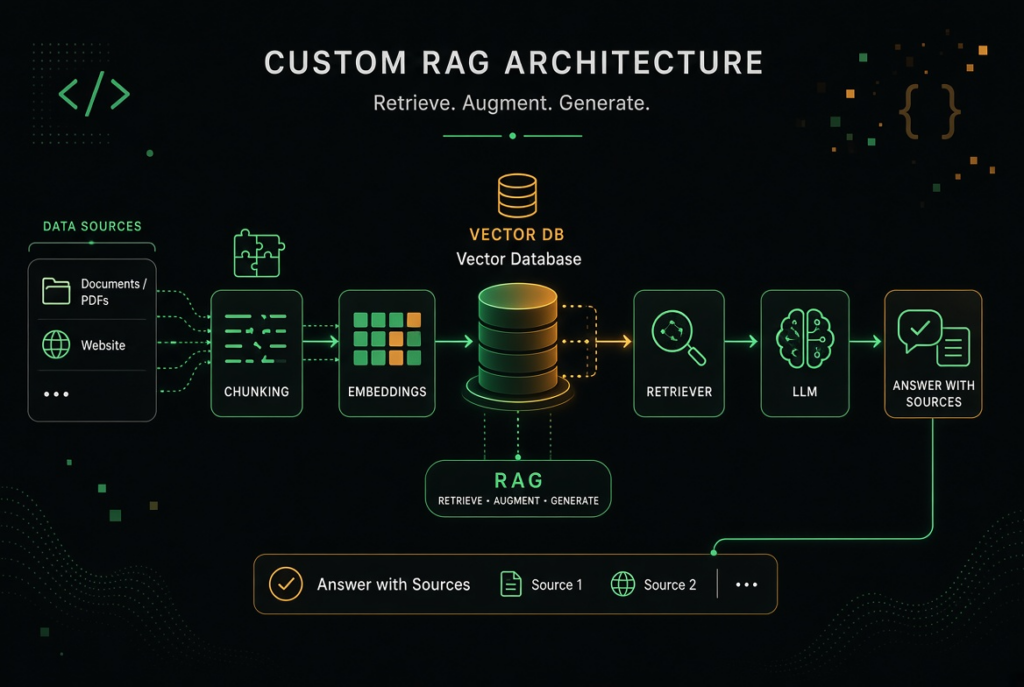
Scale: Built in-house; no single vendor number. This is not a ready-made chatbot. It is an architecture your team builds: ingest documents/website/tickets → chunk & embed → store in a vector DB → retrieve relevant pieces at query time → let the LLM answer only from that context. You can also attach tools so the bot performs actions, not just replies.
Real examples of what teams build
- SaaS product support bot that answers only from the official docs + past tickets and cites the exact page.
- E-commerce assistant that checks real order status, shipping, and return eligibility via API, then explains the result.
- Internal company brain over Confluence, Notion, and Slack exports so employees get accurate answers with source links.
- Regulated / finance or health assistant that must keep data in a specific region and log every retrieval for audit.
- Multi-step onboarding agent that guides a new user, creates a workspace, and updates the CRM when steps are completed.
How teams usually implement it
Typical path:- Choose stack: LangChain or LlamaIndex (or both), vector DB, embedding model, LLM provider.
- Build ingestion pipeline (loaders, chunking strategy, metadata).
- Set up retrieval (top-k, hybrid search, reranking if needed).
- Design prompts + guardrails + evaluation (faithfulness, relevance).
- Add tools/actions if the bot must perform operations.
- Deploy (API + website widget or messaging channels).
- Monitor, re-index, and improve based on real conversations.
What engineers are needed
| Role | Why needed |
|---|---|
| Backend / AI engineer | Core pipeline: LangChain/LlamaIndex, embeddings, vector DB, retrieval, prompts, evaluation |
| Full-stack or frontend | Website widget, admin UI, chat interface |
| DevOps / platform | Deployment, scaling, monitoring, secrets, data pipelines |
| (Optional) Data / ML | Better chunking, rerankers, fine-tuning, evaluation datasets |
| Product / domain expert | Define what “good” answers look like and which actions are allowed |
Where Upstaff fits
Building and maintaining a custom RAG system is an engineering project, not a no-code setup. Many companies do not have spare AI/backend capacity or want to avoid long hiring cycles for specialized profiles. Upstaff’s role is to supply the remote AI engineers who actually build and run this stack:- AI / LLM engineers experienced with LangChain, LlamaIndex, RAG pipelines
- Backend engineers who can connect vector DBs, APIs, and internal systems
- Full-stack engineers for the chat UI and admin tools
- Optionally DevOps for reliable deployment
How to choose
- Best AI chatbot for customer service (SaaS) → Intercom Fin
- Already on Zendesk → Zendesk AI
- Need custom logic → Botpress or Custom RAG
- Small site or Shopify → Tidio or Gorgias
- HubSpot / Salesforce → native agent
- Fast knowledge bot (often free tier) → Chatbase-style
- Full ownership → Custom RAG
FAQ
What is the best AI chatbot in 2026?

There is no universal answer. For customer service on a SaaS product, Intercom Fin is currently one of the strongest options. For free everyday use, consumer tools like ChatGPT, Claude, Gemini or DeepSeek are more relevant. For character and roleplay conversations, Character.AI remains the main dedicated platform.
What is the best free AI chatbot?
For personal use, Gemini and DeepSeek currently offer some of the strongest free experiences. For a free or low-cost chatbot you can embed on a website, Chatbase-style tools and Tidio’s free plan are practical starting points. Fully unrestricted free options usually require self-hosted open models.
What is the best AI chatbot for customer service?
Intercom Fin ranks among the best AI chatbot options for customer service in SaaS and product companies. Zendesk AI is the practical choice if you already use Zendesk. For e-commerce, Gorgias is more focused. For full control, Botpress or a custom RAG solution is better.
Is there a best AI chatbot with no restrictions?
Most major hosted platforms apply some content filters. Grok tends to be less restrictive than ChatGPT or Claude on many topics. Fully unrestricted use generally requires self-hosted open-source models.
What is the best AI character chatbot?
Character.AI is still the primary dedicated platform for character and roleplay chatbots. It is a different category from business support agents.
What is the best AI chatbot for marketing teams?
Marketing teams usually need lead qualification, website engagement, or content assistance. Tidio and Chatbase-style bots are commonly used for website lead capture. For content and campaign work, general models (Claude, ChatGPT, Gemini) are typically more useful than support-focused agents.
Which AI chatbot is best overall?
It depends on the job. For business customer service, Intercom Fin or Zendesk AI. For free personal use, Gemini or DeepSeek. For custom business logic, Botpress or LangChain. For character chat, Character.AI.

Table of Contents
- Quick comparison table
- 1. Intercom Fin
- 2. Zendesk AI
- 3. Botpress
- 4. Tidio (Lyro)
- 5. Ada
- 6. HubSpot Customer Agent
- 7. Salesforce Agentforce
- 8. Gorgias AI
- 9. ElevenLabs
- 10. Voiceflow
- 11. Sierra
- 12. Decagon
- 13. Rasa
- 14. Chatbase-style platforms
- 15. Custom RAG (LangChain / LlamaIndex + vector DB)
- How to choose
- FAQ
Popular

Popular
Recent
Talk to Our Expert
Our journey starts with a 30-min discovery call to explore your project challenges, technical needs and team diversity.

Yaroslav Kuntsevych
co-CEO