

'%3e%3cpath%20d='M0%2040.9959H9.00413V50H0V40.9959ZM0%2040.9959H9.00413V50H0V40.9959ZM0%2027.3306H9.00413V36.3348H0V27.3306ZM0%2013.6653H9.00413V22.6694H0V13.6653ZM0%200H9.00413V9.00408H0V0ZM13.2332%2040.9959H50V50H13.2332V40.9959ZM13.2332%2040.9959H50V50H13.2332V40.9959ZM13.2332%2027.3306H50V36.3348H13.2332V27.3306ZM13.2332%2013.6653H50V22.6694H13.2332V13.6653ZM13.2332%200H50V9.00408H13.2332V0Z'%20fill='%232049d8'/%3e%3c/g%3e%3cdefs%3e%3cclipPath%20id='clip0_2_8'%3e%3crect%20width='50'%20height='50'%20fill='white'/%3e%3c/clipPath%3e%3c/defs%3e%3c/svg%3e)





Hiring Full Stack Web Developers
Table of Contents
- Definition of a Full Stack Development
- Importance of Hiring an Experienced Full Stack Developer
- Factors Affecting Cost to Hire Full Stack Developers
- Compare Junior, Middle, Senior, and Expert Full Stack Web Developer Roles
- How and where Full Stack Web Development is used?
- Average Cost Analysis to Hire Full Stack Developers
- Comparison of Different Models of Hiring Full Stack Developers
- Comparison of Different Models of Hiring Full Stack Developers
- Comparison of Different Models of Hiring Full Stack Developers
- Hidden Costs of Hiring Full Stack Developers
- Negotiating Rates
- Full Stack Developer Role for Different Projects
- Capabilities of Full-stack Developers
- Benefits by Industries from Hiring Full Stack Developers
- Remote vs. Onsite Work
- Pros and Cons of Remote Work
- Conclusion
 Hiring a full stack developer is important for companies that want to create reliable and dynamic web applications. Understanding the costs associated with hiring a full stack developer is critical for budget planning and project success.
In this article, we’ll look at the wide range of factors that affect the cost of hiring an expert, including:
Hiring a full stack developer is important for companies that want to create reliable and dynamic web applications. Understanding the costs associated with hiring a full stack developer is critical for budget planning and project success.
In this article, we’ll look at the wide range of factors that affect the cost of hiring an expert, including:- level of experience;
- project complexity;
- set of technologies;
- geographical location.
Definition of a Full Stack Development
 The peculiarity of full stack development is that a single full stack software engineer works on the project. That is, one person develops:
- Server side.
- Front End.
- Design.
Importance of Hiring an Experienced Full Stack Developer
From the previous paragraph, it becomes clear that full stack developers are universal workers. However, in reality, their role is much more important for a full stack development project, including:| Capability | What You Get |
|---|---|
| Full Project Coverage | End-to-end development of large-scale products including backend, frontend, UI/UX, APIs, and databases. |
| Development Flexibility | Fast implementation of changes thanks to deep understanding of the full system and architecture. |
| Better Results | Focused ownership leads to higher quality, consistency, and fewer bugs. |
| Maintainable Code | Clean, scalable codebase designed for easy updates and feature expansion. |
| Exceptional Documentation | Clear and structured documentation covering architecture, features, and workflows. |
| Balanced Cost | Reduce costs by replacing a full team with highly efficient full stack developers. |
Factors Affecting Cost to Hire Full Stack Developers
To begin with, let’s look at the general trends in pricing expert services. Here are some parameters that impact the cost of hiring a Full Stack Developer:- More experienced developers regularly earn higher salaries.
- Knowledge of specialized technologies or frameworks can affect pricing.
- The economic situation in the region where a full stack developer lives also impacts the cost of services.
- Complex projects may require a full stack developer with higher level of experience and skills, which will increase the cost of recruiting them.
- Market demand for a full stack developer can impact pricing, for example, when it exceeds supply, or the position itself is in short supply in general.
- Hiring a freelance full stack developer can be more cost-effective than hiring an agency to build your own staff. Usually, agencies typically have higher overheads that are passed on to clients.
Compare Junior, Middle, Senior, and Expert Full Stack Web Developer Roles
Hiring the right level saves time and budget. Here’s a clear breakdown based on Upstaff’s vetted talent pool.| Seniority Name | Years of experience | Responsibilities and activities | Avg. Hourly Rate (Upstaff) | Typical Project Fit |
|---|---|---|---|---|
| Junior | 0–2 years | Fix bugs, build simple components, follow specs, learn basics | $18–$30 | MVPs, landing pages, basic CRUD apps, support tasks |
| Middle | 2–5 years | Build full features, API integration, code reviews, testing | $30–$45 | Mid-size web apps, feature development, refactoring |
| Senior | 5–8 years | Architect solutions, performance & scalability, lead small teams, security | $45–$65 | Scalable platforms, high-traffic sites, migrations |
| Expert / Team Lead | 8+ years | Define tech strategy, system design, innovation, team oversight | $65–$90+ | Enterprise systems, product scaling, R&D teams |
How and where Full Stack Web Development is used?
Full stack developers are in demand everywhere modern web applications are built:- E-commerce platforms (Shopify, custom stores)
- SaaS products and dashboards
- Fintech and banking apps
- Healthcare portals and telehealth systems
- Edtech and learning platforms
- Real-time collaboration tools
- Progressive Web Apps (PWAs)
- Serverless backends and APIs
Quick Facts about Full Stack Web Development
- One developer handles both frontend and backend — reduces team size and communication issues.
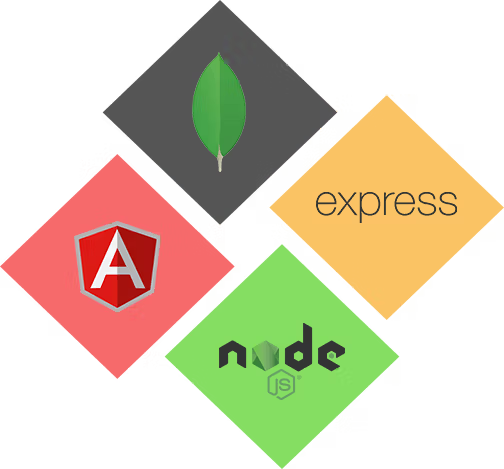
- Most popular stacks in 2026: MERN, Next.js + Node, and Laravel + Vue.
- Average project timeline: 3–9 months for MVP, 6–18 months for enterprise.
- Remote full stack roles grew 40%+ in the last year.
- Full stack is the most requested skill on hiring platforms today.
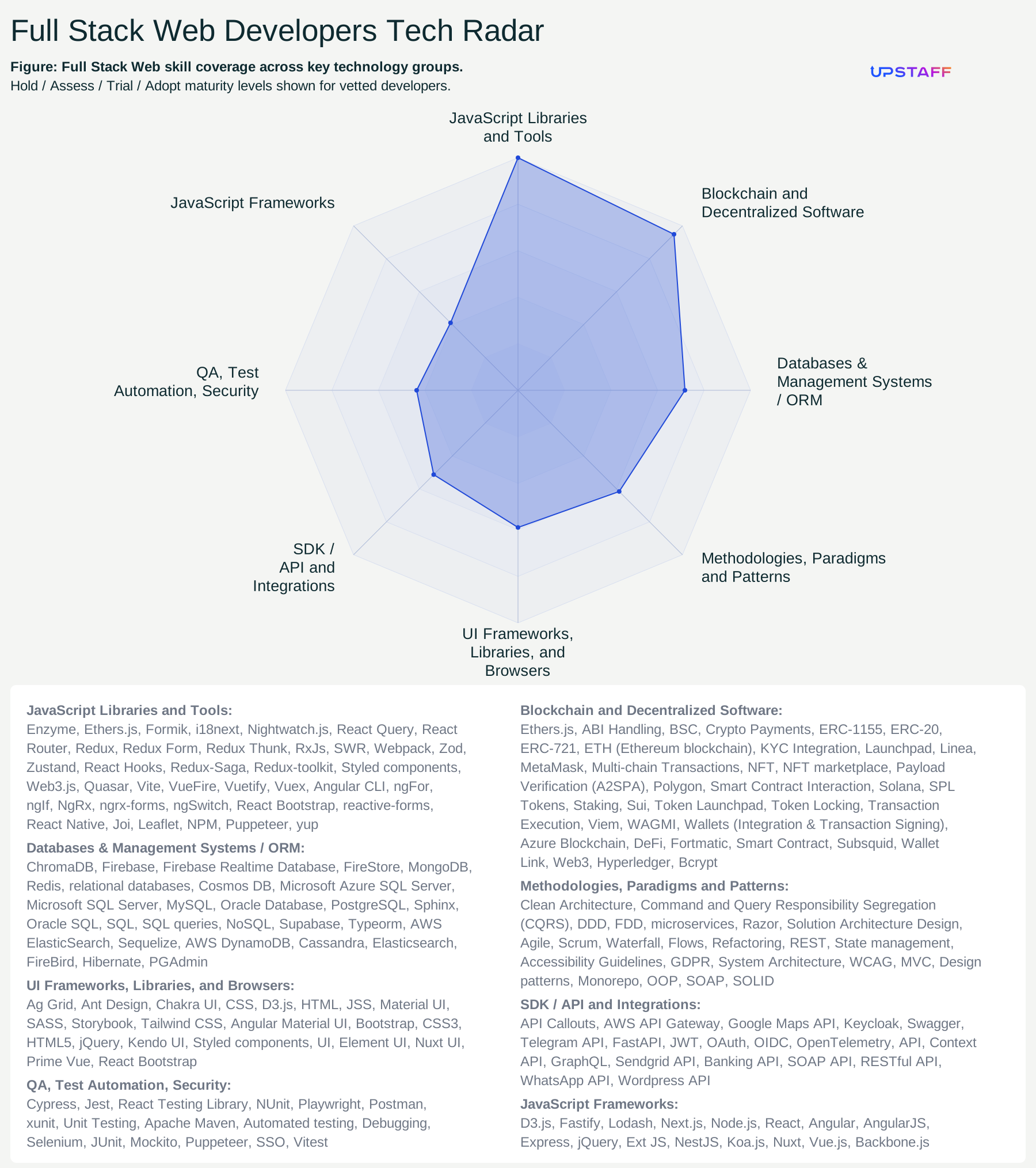
What are top Full Stack tools and instruments?
Experience Level
For high-quality full stack development, you need experienced and talented full stack developers. For example, web development requires experts in cloud technologies, designers, and engineers. And the longer the list of project needs, the more advanced full stack developer you will need. In fact, there is a direct correlation between experience and the cost of services. The more full stack developer knows and can do, the more expensive their help will be. Yes, you can find a conditional junior and save money, but a senior will develop a better quality product. The compromise is obvious – if you need a balance of price and quality, you should choose the middle option, i.e., a middle full stack developer.Location
The region of residence and work of a full stack developer has a significant impact on the cost of services. For example, if the economic situation in a certain country is good, the cost of a specialist’s work is also high. That is why it is customary to divide the regions for hiring a full stack developer into the following:- USA/Canada/Western Europe. The highest hourly rates for full stack developers are guaranteed. However, the quality of services here is also the highest, so it justifies the price.
- China and Asian countries. Relatively low rates, but mediocre quality of services. There is also a rather large gap between time zones, which causes some difficulties.
- Eastern Europe. Optimal price/quality balance and favorable terms of cooperation. Especially if you hire a full stack developer from Ukraine, Poland, and the Czech Republic.
- India. Perhaps the cheapest region in terms of the cost of services. Sometimes, you can hire a full stack developer here for less than $20/hour. However, problems may arise during the cooperation.
- Other regions. Depending on a particular country, its economy, and its politics, the cost of full stack developer services can be quite different.
Project Complexity
The cost of cooperation with full stack developers will also vary due to the scope of the project. That is, if you order a relatively small web development product or basic mobile applications, web application, the price of services will be lower. When it comes to complex and large-scale systems, such as full-fledged ERP, the cost increases significantly. In fact, the same applies to the timeframe for product implementation. For example, developing the same solution in three months will cost more than in six months.Technology Stack
The cost of hiring a full stack developer will also depend on the tech stack. In particular, this is reflected in the following factors:- The more complex or problematic the technology stack required for the project, the higher the cost of full stack developer services can be.
- If the technology stack is niche or in high demand, this may affect the cost of full stack developer services, as it may be more difficult to find qualified developers due to a shortage of relevant talent in the labor market.
- Certain technologies have licensing or usage fees or require special, costly tools that may increase the total cost of hiring a full stack developer.
- Certain technology stacks may require ongoing maintenance and support, which may impact the total cost of hiring a full stack developer.
- If a technology package is new to a full stack developer, it may entail additional training and adaptation costs. However, this is an exception rather than a common practice.
Industry Demand
The cost of full stack developers’ services will also depend on the industry for which the project is to be implemented. More precisely, it depends on how complex the product implementation is in terms of technology, functions, and compliance with the regulatory requirements of the niche. For example, for an industry that works with sensitive data, i.e., there are well-defined information security standards, ISO-compliant application architectures, the cost of full stack developer services will be higher. We will discuss the issue of industries in the context of the use of programming languages, full stack developer skills, and software development features later. For now, let’s compare the average rates of experts in this segment of the world.Average Cost Analysis to Hire Full Stack Developers
Conducting an analysis of the average cost of hiring a full stack developer is important for companies that want to create reliable digital solutions. This in-depth check involves estimating the various costs associated with the hiring process, such as:- salary;
- benefits;
- training;
- onboarding costs.
Hourly Rates vs. Project-Based Pricing
 Hourly rates and project-based pricing are two common ways that service providers, such as full stack developers, get paid for their work. Here’s a comparison of the two cost-effectiveness models:
| Pricing Model | How It Works | Advantages | Disadvantages |
|---|---|---|---|
| Hourly Rate | Payment depends on the number of hours worked by the developer and the agreed hourly rate. |
|
|
| Project-Based (Fixed Payment) | Clients pay a flat fee for the entire project, regardless of actual hours worked. |
|
|

Front End Development in Full Stack Development
The duties of full stack developers are related to the development of the interface, which involves the creation of visual and interactive components of a website or web application that users are able to interact with directly. Front end developers should have a good understanding of web technologies, know the principles of design, know coding languages such as JavaScript, and have experience with frameworks such as React, Angular, or Vue.js. They also usually work with technologies such as HTML, CSS to build the user interface (UI) and user experience (UX) of a website. Given these points, the cost of hiring an expert who is well-versed in the front end of a project is often higher than for generalists.
Back End Development in Full Stack Development
A full stack developer should also understand the principles of interaction between the interface and the server side to receive and display data, process user input, and control the logic of the application. The connection between the interface and the server are crucial for the overall functionality of the web application. Back end developers typically work with technologies such as Node.js, Python, Ruby on Rails, and databases such as MySQL or MongoDB to create server-side web applications. They are responsible for creating APIs, managing databases, implementing security measures, optimizing performance, and ensuring the smooth operation of the server side of the application. That is why the cost of hiring specialists with a wide range of skills is higher than that of specialists with a specific skill set, as they cover aspects of development that usually require a whole team.
Project Management in Full Stack Development
The cost of full stack developers’ services is also determined by their role in project management, which includes the following items:| Project Management Area | Full-Stack Developer Responsibilities | Business Value |
|---|---|---|
| Requirements Collection & Analysis | Gather detailed requirements for all functions and client needs. Analyze project scope, limitations, and risks to plan effectively. | Ensures a well-defined project plan, reducing misunderstandings and scope creep. |
| Technology Selection | Choose suitable frontend and backend technologies (HTML, CSS, JavaScript frameworks, server-side languages, databases) based on reliability, performance, security, and compatibility. | Optimizes performance, reduces technical debt, and ensures scalable architecture. |
| Task Prioritization & Planning | Break projects into smaller tasks, prioritize based on dependencies and criticality, and set milestones, deadlines, and checkpoints. | Clear roadmap and structured execution lead to timely delivery and minimized bottlenecks. |
| Flexible Project Management | Apply agile methodologies (Scrum, Kanban) using tools like Jira, Trello, or Asana. Adapt to changes and stakeholder feedback iteratively. | Enhances responsiveness to changes and improves collaboration and transparency. |
| Quality Assurance & Testing | Conduct thorough testing of external and internal components, implement automated testing, and perform User Acceptance Testing (UAT). | Ensures high-quality, secure, and reliable applications that meet user expectations. |
| Deployment & Maintenance | Plan deployment strategies, monitor applications post-launch, and create maintenance plans with updates, patches, and enhancements. | Maintains long-term stability, performance, and user satisfaction while reducing downtime and risk. |
Comparison of Different Models of Hiring Full Stack Developers
When you need a full stack developer, you’ll definitely consider different recruitment options. For example:- You can hire specialists onsite, directly into the company’s staff. This is an excellent option if you require total control over the development with a minimum of associated risks, however, in terms of costs.
- You can hire freelancers to work on short-term projects, to get quick access to skilled talent, or to scale up your existing team and mitigate certain development issues.
- You can hire the right kind of staff from specialized agencies. For example, you can agree to repatriate a full stack developer to your team or project under certain conditions. In particular, with compensation for their current level of earnings, etc.
Comparison of Different Models of Hiring Full Stack Developers
Choosing the right hiring model is crucial for project success and budget optimization. Here’s a clear comparison of the most common approaches.Comparison of Different Models of Hiring Full Stack Developers
Choosing the right hiring model is crucial for project success and budget optimization. Here’s a clear comparison of the most common approaches.| Hiring Model | Description | Advantages | Disadvantages |
|---|---|---|---|
Freelance vs. In-House Developers | Full stack developers can be either members of your current in-house team or third-party contractors (freelancers). |
|
|
Generalist Full Stack Developers vs. Specialized Developers | A full stack developer handles both frontend and backend independently, covering the entire development scope. |
|
|
Full Stack Developer vs. Team of Specialists | One full stack developer can often replace a small team, but has limitations in speed and scale. |
|
|
Hidden Costs of Hiring Full Stack Developers
The cost of full stack developer services often includes additional fees and commissions, as well as operational expenses. At the same time, they are rarely reflected in the hourly rates for which you hire experts. Let’s see what else you might have to pay if you’re going to hire a developer for your project.| Cost Factor | Description |
|---|---|
| Recruitment Expenses | Hiring full stack developers through marketplaces or platforms often involves recruitment fees, job posting costs, and candidate sourcing expenses that add to the overall budget. |
| Maintenance & Support | Ongoing product maintenance, updates, and scaling (especially for web or mobile applications) create additional costs that are often not included in the initial hiring estimate. |
| Infrastructure & Tools | Licensed technologies, paid frameworks, cloud services, and third-party tools can significantly increase total project costs beyond developer salaries. |
Negotiating Rates
Sometimes, the cost of cooperation with full stack developers in the context of full stack development can be quite high. However, according to the market rules, you can try to reduce it. To do this, you need to conduct an interview and additionally discuss the validity of the rates, project calculations, etc.| Aspect | Key Strategies & Considerations | Benefits & Potential Drawbacks |
|---|---|---|
| Market Research | Before negotiations, research current market rates for full stack developers in your region or target location. Use this data as a solid foundation for discussions. | Provides realistic expectations and strengthens your position in talks. |
| Flexible Compensation Packages | Offer a mix of base salary, performance bonuses, equity, or other incentives instead of a high fixed rate. This can motivate developers to accept a lower base cost while delivering high-quality results. | Attracts top talent at a more affordable total cost; encourages long-term commitment and better performance. |
| Contractual Considerations | Full stack developers often don’t have rigid contract templates. Collaboratively define terms, such as building an MVP on a simpler tech stack to reduce complexity and cost. | Gives room for creative cost-saving solutions tailored to your project needs. |
| Pricing Models & Transparency | Prefer the Fixed Project Cost model for maximum transparency — you pay for the delivered work rather than hours spent. Clearly define scope, deliverables, and timelines in the agreement to avoid delays. | You know the exact cost upfront and pay only for actual results. Drawback: May pressure timelines; mitigate by including milestones and deadlines in the contract. |
Full Stack Developer Role for Different Projects
Full stack developers are able to cover all the needs of a project on their own or as part of a team. That’s because each expert has:| Capability | What It Means | Business Impact |
|---|---|---|
| Wide Range of Skills | Full-stack developers work across frontend and backend, using multiple technologies and stacks. | One engineer can handle multiple layers of development, reducing the need for separate specialists. |
| End-to-End Ownership | Capable of building complete solutions—from concept and development to deployment and support. | Faster delivery with fewer handoffs and better accountability. |
| Strong Communication | Collaborates effectively with designers, developers, and project managers. | Smoother workflows and fewer misunderstandings across teams. |
| Flexibility & Adaptability | Quickly adjusts to new technologies, requirements, and project directions. | Easier scaling and faster response to changing business needs. |
| Holistic Project View | Understands how frontend and backend interact as a unified system. | More consistent architecture and better overall system performance. |
| Cost Efficiency | Covers a wide range of tasks without requiring multiple specialized roles. | Lower development costs and higher operational efficiency. |
| Business Type | How Full-Stack Developers Help | Why It Works |
|---|---|---|
| Startups | Take your product from discovery to market launch, covering both frontend and backend development. | Faster time-to-market with lower initial investment and fewer hires. |
| Small Businesses | Handle end-to-end development for small-scale digital products and platforms. | Cost-effective solution for building and maintaining products without large teams. |
| Enterprise-Level Projects | Work as part of a team of full-stack engineers to cover complex, large-scale systems. | Scalable team model that reduces hiring costs while maintaining high quality. |
| E-Commerce Platforms | Build and manage medium-sized online stores, storefronts, or marketplace solutions. | Flexible development with the option to scale with additional specialists when needed. |
| Mobile App Development | Develop web and mobile applications, including cross-platform solutions or migrations. | One engineer can cover multiple platforms, reducing development complexity and cost. |
Capabilities of Full-stack Developers
Upstaff full-stack developers excel in frameworks, server management, APIs, and databases. They create end-to-end web solutions, combining their front- and back-end expertise to deliver scalable, efficient, and secure apps.| Capability | What Full-Stack Developers Do | Business Value |
|---|---|---|
| End-to-End Web App Development | Build complete applications covering both frontend and backend, integrating UI with scalable server-side architecture. | One team delivers a fully functional product, reducing dependencies and accelerating delivery. |
| Responsive User Interfaces | Create mobile-friendly interfaces using HTML, CSS, React, Angular, and modern UI frameworks. | Better user engagement and consistent experience across all devices. |
| Building RESTful APIs | Develop secure, high-performance APIs for communication between systems and third-party services. | Seamless integrations and scalable architecture for future growth. |
| Application Security | Implement authentication, encryption, and security best practices across the stack. | Protection of user data and compliance with industry standards. |
| Debugging and Troubleshooting | Identify and resolve issues across frontend and backend systems. | Stable, reliable applications with minimal downtime. |
| Version Control & Collaboration | Use Git, CI/CD pipelines, and collaboration tools to manage code and workflows. | Faster development cycles and better team coordination. |
| Performance Optimization | Improve application speed via code optimization, database tuning, and caching strategies. | Faster load times, improved UX, and higher user retention. |
| Database Design & Integration | Design schemas, write efficient queries, and integrate databases with applications. | Reliable data handling and scalable system performance. |
| Cloud Deployment | Deploy and manage applications on AWS, Azure, and Google Cloud infrastructure. | High availability, scalability, and infrastructure reliability. |
| Maintenance & Upgrades | Continuously improve applications by fixing issues, adding features, and updating tech stacks. | Long-term product stability and adaptability to business needs. |
Benefits by Industries from Hiring Full Stack Developers
Full stack developers, as a rule, have a lot of experience working with the most relevant industries. Therefore, they can easily implement products for your type of business. This is due to a number of factors inherent in these experts:- Developers can easily adapt to rapid technological advances, which makes them valuable assets in industries where changes are constant.
- These developers have a wide range of skills, which allows them to work effectively with different aspects of projects.
- Hiring full stack developers can increase a company’s competitiveness in the labor market due to their diverse skill sets.
- Specialists can speed up the development process, leading to timely project completion.
- They have a complete understanding of both front end and back end development, which allows them to have a holistic view of projects.
| Industry | Full-Stack Developer Capabilities | Business Value |
|---|---|---|
| Healthcare | Build clinic apps, medical platforms, pharmacy apps, health monitoring systems, and other healthcare software while ensuring compliance with industry standards. | Reliable, compliant solutions that meet the unique needs of healthcare providers and patients. |
| Finance | Develop online banking apps, payment services, and blockchain-based solutions for the financial sector. | Secure, scalable financial applications that meet regulatory requirements and user expectations. |
| Education | Create educational platforms, streaming systems, digital libraries, and other learning-focused applications. | Engaging, accessible educational solutions that enhance learning experiences. |
| Technology | Implement software of any type or format for tech companies, including web apps, SaaS platforms, and internal tools. | Versatile solutions that adapt to evolving tech business needs and scale with growth. |
| Retail | Build storefronts, marketplaces, e-commerce platforms, and other retail-focused resources depending on business needs. | Flexible, customer-facing solutions that drive sales and improve user experience. |
Remote vs. Onsite Work
Full stack developers within full stack development can work both on-site, i.e., directly in the office, and remotely. Each of the options is beneficial and effective in its own way. However, remote work is a bit more interesting in terms of flexibility. Therefore, we offer you a brief overview of the advantages and disadvantages of hiring remote specialists.Pros and Cons of Remote Work
Remote work has become a standard practice for full stack developers. Here is a balanced overview of its main advantages and disadvantages.| Advantages of Remote Work | Disadvantages of Remote Work |
|---|---|
|
|
Conclusion
Hiring a full stack professional is not a panacea, but it is the best way to develop a digital product on a limited budget. However, if you want to find a truly expert performer and not break the budget, you will have to make an effort. As for where to find a candidate, it’s definitely Upstaff. Only here you will find the best world-class talent. If you need help, our HRs will select candidates for you, taking into account the needs and budget of your project.
Table of Contents
- Definition of a Full Stack Development
- Importance of Hiring an Experienced Full Stack Developer
- Factors Affecting Cost to Hire Full Stack Developers
- Compare Junior, Middle, Senior, and Expert Full Stack Web Developer Roles
- How and where Full Stack Web Development is used?
- Average Cost Analysis to Hire Full Stack Developers
- Comparison of Different Models of Hiring Full Stack Developers
- Comparison of Different Models of Hiring Full Stack Developers
- Comparison of Different Models of Hiring Full Stack Developers
- Hidden Costs of Hiring Full Stack Developers
- Negotiating Rates
- Full Stack Developer Role for Different Projects
- Capabilities of Full-stack Developers
- Benefits by Industries from Hiring Full Stack Developers
- Remote vs. Onsite Work
- Pros and Cons of Remote Work
- Conclusion
Talk to Our Expert
Our journey starts with a 30-min discovery call to explore your project challenges, technical needs and team diversity.

Yaroslav Kuntsevych
co-CEO